Ik ben een…Trainer · CoachHR · Team · LeiderDistributeur
Emotions of Normal People · hoofdstuk XV van XVIII ← Overzicht van alle hoofdstukken
Deel 4 · Liefde en creatie
XV
Love Mechanisms

Hoe liefde werkt

Marston werkt de lichamelijke kant uit. De les blijft: liefde dient, niet gebruikt.

Je leest op deze pagina hoofdstuk XV van het boek Emotions of Normal People van William Marston, de oerbron van DISC.

HBG-toevoeging · leeswijzer in onze taal
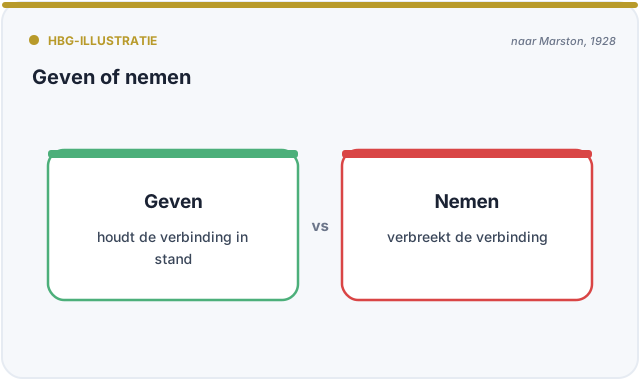
HBG-illustratie bij hoofdstuk XV, Hoe liefde werkt
HBG-illustratie · door HBG toegevoegd om dit hoofdstuk toegankelijk te maken. Geen onderdeel van Marstons origineel.

In het kort

Hier werkt Marston de lichamelijke kant van liefde uit, in de taal van 1928. Veel van die fysiologie is speculatief en achterhaald. Wij nemen die niet over.

Onder al die verouderde biologie zit een tijdloze les. Liefde en begeerte zijn twee verschillende dingen, en wie ze verwart, verliest ze allebei.

Uit de vorige analyse, die captivatie en passie liet optreden zonder prikkeling van de geslachtsdelen, blijkt al dat die organen niet de enige bron van liefde zijn. Captivatie en passie zijn samengestelde integraties die door allerlei geschikte prikkels kunnen worden opgeroepen. Toch lijken de geslachtsdelen bij uitstek gebouwd om liefde-integraties tot stand te brengen, net zoals de spijsverteringsorganen bij uitstek gebouwd zijn voor het patroon van appetijt.

De geslachtsdelen werken waarschijnlijk ook als versterkende mechanismen voor liefde-opwinding die ergens anders is ontstaan. Hoe dan ook, de geslachtsdelen zijn, net als de spijsverteringsmechanismen, te zien als natuurlijke, vanzelf werkende leermeesters van de samengestelde emoties die ze horen op te wekken. Dat ze automatisch captivatie en overgave kunnen oproepen, wordt duidelijk uit een korte blik op hun bouw en werking na de seksuele rijping. Beide geslachten hebben twee stel geslachtsdelen, inwendige en uitwendige.

In dit hoofdstuk · 8 delen
  1. De lichamelijke basis
  2. De liefde-cyclus
  3. Passie en climax
  4. Liefde is geen begeerte
  5. Naar de vereniging toe
  6. Waarom dwang alles bederft
  7. De passie van vrouwen
  8. Liefde als eigen kwaliteit
Deel 1 van 8

De lichamelijke basis

HBG-beeld bij De lichamelijke basis
HBG-toevoeging · samenvatting en beeld in onze stijl. Geen onderdeel van Marstons origineel.

In het kort, in onze taalMarston beschrijft, in de taal van 1928, hoe de geslachtsdelen en het bewegingszelf samenwerken. Veel van deze fysiologie is achterhaald.

De geslachtsorganen

De penis is het enige strikt uitwendige geslachtsdeel van de man. De vrouwelijke clitoris, waarover veel onwetendheid bestaat, komt in psychische functie precies overeen met de penis. Wat de evolutionaire achtergrond ook is, de gevolgen van prikkeling van de clitoris in het zenuwstelsel lijken gelijk aan die van de penis. Langley en Anderson gaven al in 1895 een blijkbaar juiste beschrijving van de bezenuwing van de inwendige en uitwendige geslachtsdelen. Bij beide geslachten worden de uitwendige delen vooral bezenuwd via de nervi erigentes, de inwendige via sympathische vezels. Al benadrukten Cannon en anderen de wederzijdse tegenstelling tussen de sympathische en de sacrale tak van het autonome zenuwstelsel, Langley stelde dat een volledige tegenstelling in werkelijkheid niet bestaat.

Het bewegingszelf voedt inwendige en uitwendige delen tegelijk

Het gedrag van dieren toont dat het mannetje veel skeletspieractiviteit kan vertonen bij het zoeken van het vrouwtje, met een volledige erectie die de hele tijd aanhoudt. Omdat actieve skeletspieren extra bloed nodig hebben via de sympathische impulsen, weten we dat delen van het sympathische stelsel tegelijk actief moeten zijn met een verhoogde ontlading door de sacrale nervi erigentes. Metingen van bloeddruk en pols bij mensen tijdens de geslachtsdaad tonen dat een stijging van de bovendruk, teken van een sterkere hartslag door sympathische impulsen, in bepaalde fasen gelijk opgaat met de toegenomen bloedtoevoer naar de uitwendige geslachtsdelen door sacrale bezenuwing.

Deze gelijktijdige toename staat tegenover de afname van de sympathische impulsen naar de bloedvaten van de arm op het toppunt van de hongerpijn. Daaruit besluiten we dat het normale tonische evenwicht van het organisme een sterk overwicht van sympathische ontlading vraagt, maar dat datzelfde evenwicht een gelijktijdige en bondgenote ontlading vraagt naar de inwendige geslachtsdelen via sympathische banen en naar de uitwendige via de sacrale banen. Buiten de remming van de schors om houdt het organisme waarschijnlijk een licht overwicht van ontlading naar de inwendige delen, want de uitwendige raken alleen in erectie na bijzondere prikkeling.

Alle prikkels die de geslachtsdelen activeren, zijn bondgenoot

Als deze analyse klopt, is elke prikkel die uitweg zoekt in de inwendige of uitwendige geslachtsdelen bondgenoot van het bewegingszelf. Prikkels die de ontlading naar de inwendige delen versterken, staan in een verhouding van overgave tot het gewone evenwicht. Vergroot het bewegingszelf zich om die prikkels naar de inwendige delen te dwingen, dan valt dat samen met de definitie van invloed. Zoekt een prikkel juist uitweg naar de uitwendige delen, dan staat hij in een verhouding van invloed tot het bewegingszelf. Vermindert het bewegingszelf zich om extra opwinding van de uitwendige delen toe te laten, dan is dat overgave.

Deel 2 van 8

De liefde-cyclus

HBG-beeld bij De liefde-cyclus
HBG-toevoeging · samenvatting en beeld in onze stijl. Geen onderdeel van Marstons origineel.

In het kort, in onze taalWaar de man geen vaste inwendige cyclus heeft, kent de vrouw er volgens Marston wel een. Wij lezen dit als speculatief tijdsbeeld.

Geen cyclische liefde-prikkel bij de man

Meerdere onderzoekers hebben vergeefs gezocht naar een spontane inwendige cyclus van liefde-prikkeling bij de man, vergelijkbaar met de menstruatiecyclus van de vrouw. Mannen lijken zo'n automatisch mechanisme niet te hebben. In de puberteit kunnen jongens ongecontroleerde opwinding beleven, met erectie zonder uitwendige prikkel, maar na de rijping is dat bij de normale man zeer zeldzaam. Pogingen om inwendige oorzaken aan te wijzen, zoals volle zaadblaasjes, leverden bij mijn eigen studies geen enkel bewijs op. Zulke gevallen zijn volgens mij terug te voeren op eerdere prikkeling door erotische indrukken. Ook de opwinding tijdens de slaap lijkt daaraan toe te schrijven, en komt bij jonge vrouwen even vaak voor als bij mannen, en kan dus niet aan een mannelijk hormoon liggen. Wat die spontane erecties wel tonen, is dat het tonische evenwicht zo gelijk over inwendige en uitwendige delen is verdeeld dat een lichte afname van de remming van de schors, zoals in de slaap, het evenwicht kan doen verschuiven zodra er nog wat opgehoopte, niet ontladen energie van eerdere prikkeling is. Mijn conclusie is dat de volwassen man na de rijping geen automatische inwendige prikkel heeft, en afhankelijk is van uitwendige prikkeling, waaronder ook gedachten en herinnerde gewaarwordingen, om captivatie of passie op te roepen.

De liefde-cyclus bij de vrouw

Bij meisjes en vrouwen is de situatie geheel anders. Verslagen van minstens vijftig vrouwen tonen een duidelijke toename van liefde-opwinding vlak voor de menstruatie, of vlak erna, of op beide momenten. Een klein aantal zorgvuldig bestudeerde gevallen toont een verschil tussen de opwinding vlak voor de menstruatie en die in de periode erna. De prikkeling die vlak voor de menstruatie in de inwendige delen plaatsvindt, door de rijping van de follikel en de veranderingen in de baarmoeder, lijkt een rustelozer en heftiger zoeken op te leveren dan de periode erna. Vlak na de menstruatie bevat het zoeken een groter element van overgave, en wordt de opwinding als vollediger en overvloediger beschreven dan ervoor.

Op beide momenten worden prikkels opgewekt die uitweg zoeken naar zowel inwendige als uitwendige delen. Na de menstruatie is er in sommige gevallen een groter aandeel uitwendige opwinding, blijkbaar als na-ontlading van nog grotere uitwendige opwinding tijdens de menstruatie zelf. Zorgvuldige zelfwaarneming toonde dat die opwinding tijdens de menstruatie merkbaar toenam door het dragen van een verband dat de clitoris prikkelt. Tijdens de menstruatie zelf overheerst dus de uitwendige ontlading, en is er sprake van passieve liefde. Neemt de totale menstruatieprikkeling toe naar zowel inwendige als uitwendige delen, maar overwegend naar de uitwendige, dan zien we prikkels van zowel overgevende als beinvloedende aard. Het gedrag, met duidelijk toegenomen rusteloosheid en opwinding, toont een sterke toename van het bewegingszelf, en dus overheerst actieve invloed. Toch kan die invloed het evenwicht niet herstellen, want er blijft een flinke ontlading naar de uitwendige delen gaan. Tegenover die prikkels bevindt het bewegingszelf zich dus in passieve overgave.

De vrouw zoekt de man

Hongerpijn maakt het organisme onbekwaam tot elke reactie behalve op voedsel, dat sterker is dan de honger maar zwakker dan het organisme, zodat het zich kon domineren terwijl het zich passief schikte naar de honger. De liefde-situatie na de menstruatie is hiermee vergelijkbaar. Na haar menstruatie wordt de vrouw ertoe gedreven een man te zoeken, want zijn lichaam laat haar met actieve invloed reageren, terwijl ze zich tegelijk passief overgeeft aan een deel van de menstruatieprikkels. Zoals de hongerige het voedsel kon domineren omdat dat op zijn beurt de honger overwon, zo kan de vrouw de man actief beinvloeden omdat hij een prikkel is die zwakker is dan zijzelf, maar sterker dan de prikkels die haar uitwendige delen opwinden.

De penis, in de mond van de vagina, prikkelt rechtstreeks de inwendige delen van de vrouw. De prikkels die de man haar geeft, hebben twee kenmerken. Ten eerste zijn ze geheel overgevend aan haar eigen evenwicht. Ten tweede volgen ze de baan naar de inwendige delen, en verhogen ze de ontlading daarheen tot de ontlading naar de uitwendige delen, opgewekt door de menstruatie, geheel is opgeheven en het evenwicht hersteld. Dat herstel lukt via de prikkeling door de man, terwijl het de vrouw zelf voordien niet lukte. Ze voelt dus tegelijk actieve invloed op de man en passieve overgave aan de nog werkzame menstruatieprikkels. Wanneer de prikkels van de man de ontlading naar de uitwendige delen volledig tegenwicht bieden, worden die laatste overweldigd, en ontstaat een reeks ritmische samentrekkingen in baarmoeder en vagina, het orgasme. Vrouwen noemen dit soms een inwendig orgasme. Het is de voltooiing van de actieve invloed op de man, die genoeg bondgenote prikkels heeft veroverd om de menstruatieprikkels even tegenwicht te bieden. Dit overweldigen is tijdelijk, en zelfs drie of vier inwendige orgasmes achtereen heffen de onderliggende toestand niet op, die aanhoudt zolang de na-ontlading van de menstruatie werkzaam blijft.

Deel 3 van 8

Passie en climax

HBG-beeld bij Passie en climax
HBG-toevoeging · samenvatting en beeld in onze stijl. Geen onderdeel van Marstons origineel.

In het kort, in onze taalMarston werkt de lichamelijke kant van passie en climax uit, opnieuw sterk gedateerd van toon.

Het mannenlichaam is alleen gebouwd voor passie

Omdat de inwendige delen van de man nooit rechtstreeks door de vrouw kunnen worden geprikkeld, is zijn uiterlijke reactie er een van actieve overgave, opgewekt door de toenemende prikkeling van zijn uitwendige deel, dat geheel door de vagina wordt omsloten. In hoofdstuk elf zagen we al dat erectie een overgevende reactie is, mogelijk gemaakt door bondgenote prikkels die het bewegingszelf in deze sacrale baan sturen, omdat ze sterk genoeg zijn om de gewone remming van de schors te overwinnen. Om de penis in de vagina te houden, moet het bewegingszelf zich voortdurend een beetje versterken, genoeg voor de erectie. Die versterking strekt het te prikkelen deel steeds uit, en nodigt zo uit tot prikkeling door het enige passend gebouwde deel van het vrouwenlichaam. Deze versterking om verdere prikkeling tot overgave te verkrijgen, is passieve invloed. Het is precies dezelfde reactie als het kind dat zijn voeten uitsteekt om gekieteld te worden, of het eerstejaars meisje dat haar handen uitstak om meer boeien te ontvangen. Het uitstrekken van de penis is een gespecialiseerde vorm van die passieve invloed, alleen geschikt als uitnodiging aan een gespecialiseerd captiverend orgaan, de inwendige delen van de vrouw. Tijdens de daad uit de man dus passieve invloed, genoeg om zijn lichaam prikkelbaar te maken, en tegelijk actieve overgave in de bewegingen die door de druk van de vagina worden opgeroepen. Deze samenstelling van actieve overgave en passieve invloed is lichamelijke passie.

De climax van de man is actieve liefde

Het mannelijke orgasme verschilt van het vrouwelijke inwendige orgasme. Het verschijnt wanneer door de prikkeling zoveel van het bewegingszelf is vrijgekomen dat de totale kracht van het zelf groter wordt dan die van de prikkels die het tot overgave dwongen. Dan neemt het bewegingszelf de leiding en keert terug naar zijn eigen evenwicht, dat een overwicht van ontlading naar de inwendige delen vraagt. Het neemt daarbij, via actieve invloed, de zojuist veroverde bondgenote prikkels mee, waaraan het zich eerst overgaf. De inwendige delen trekken ritmisch samen, en die reeks samentrekkingen stoot het zaad uit. Tijdens dat orgasme verschuift de liefde van passief naar actief. De passieve invloed van de man wordt actief: hij beweegt de vrouw nu actief tot een geheel nieuwe reactie van voortbrenging. Tegelijk verandert zijn actieve overgave in passieve overgave: hij geeft zich passief over aan de vrouw doordat hij haar inwendige delen de samentrekkingen laat opwekken die voor de voortplanting nodig zijn. Zo verschuift de man op het toppunt van zijn liefde van passie naar captivatie, niet om de vrouw voor zichzelf te veroveren, maar voor het kind dat uit deze voltooiing van zijn passie voortkomt.

Het verschil tussen het inwendige orgasme van de vrouw en het orgasme van de man ligt in de aansluiting op de vorige emotie. De vrouw uitte actieve liefde, en die mondt uit in een zo volledige invloed op de menstruatieprikkels dat die even worden overweldigd. Het is voor haar makkelijk terug te keren naar actieve liefde, want een lichte ontspanning volstaat. Voor de man is dat moeilijker. Zijn nieuwe toestand van actieve liefde moet eerst precies worden omgekeerd voordat passie hem weer kan beheersen. Daarvoor is nieuwe uitwendige prikkeling nodig, tot er weer genoeg van het bewegingszelf naar de penis gaat om de erectie te herstellen. Dat vraagt vaak een flinke rustpauze. Tussen twee inwendige orgasmes van de vrouw is de hersteltijd dus veel korter, misschien nul, dan tussen het orgasme van de man en hernieuwde passie.

De vrouw kan beide fasen van liefde beleven. Door prikkeling van de clitoris door een andere vrouw kan passie op precies dezelfde manier worden opgeroepen als bij de man, gevolgd door een orgasme dat dezelfde overgang van passie naar captivatie is. Vrouwen noemen dit vaak een uitwendig orgasme. Het houdt vaak wat langer aan dan het mannelijke en wordt gevolgd door diepere loomheid. Sommige vrouwen melden flink wat prikkeling van de clitoris tijdens de gewone gemeenschap, andere weinig of niet. Dat lijkt een kwestie van ligging. Vrouwen beleven zelden een uitwendig orgasme tijdens de omgang met een man, en blijven daardoor na afloop vaak in een toestand van passie die door geen enkel inwendig orgasme wordt gestild.

Deel 4 van 8

Liefde is geen begeerte

HBG-beeld bij Liefde is geen begeerte
HBG-toevoeging · samenvatting en beeld in onze stijl. Geen onderdeel van Marstons origineel.

In het kort, in onze taalDe kern die wel blijft: mannen verwarren liefde graag met begeerte. Maar liefde die gaat nemen in plaats van geven, houdt op liefde te zijn.

Mannen verwarren liefde graag met appetijt

Bij het liefdegedrag van mannen en vrouwen moeten we steeds bedenken dat appetijt bij bijna iedereen onlosmakelijk met liefde verward raakt. We noemden al de neiging, vooral bij de man, om invloed met dominantie te verwarren en captivatie met begeerte. De volkstaal voor liefde toont niet alleen die onbewuste verwarring, maar ook het dominante genoegen waarmee veel mannelijke auteurs haar in stand houden. Liefde appetijt noemen plaatst haar meteen in een categorie die de man kan begrijpen en beheersen. Erkent hij dat zelfs actieve liefde vereist dat hij zich geheel verbindt met het belang van de ander, dan wordt de reactie hem tegen, want dat betekent dat hij niet krijgt maar geeft, en geven is voor de meeste mannen alleen te rechtvaardigen als er een groter krijgen op volgt.

Zien we liefde als afhankelijk van de mate waarin de man zich aan een ander, vooral een vrouw, wil overgeven, dan volgt meteen dat hij die aangenaamste helft van het leven niet langer met zijn dominantie kan beheersen. Erkent hij liefde voor wat ze is, dan kan hij er alleen een werkelijk overwicht in bereiken door zich in verhouding tot zijn dominantie meer over te geven dan de vrouw. Dit alles wordt niet bewust bedacht, maar het bestaat volgens mij als emotionele onderstroom in de houding van bijna alle mannen tegenover liefde. Zo vinden we in de literatuur, meest door mannen geschreven, een reeks min of meer bewuste verkeerde benamingen. Actieve liefde wordt begeerte, passie wordt een appetijt, en lichamelijke liefde wordt een seksuele appetijt genoemd, gescheiden van prijzenswaardige maar wat bloedeloze staten als liefde voor de deugd. De boodschap is duidelijk: de geslachten worden voorgesteld als elkaar verslindend, elk voor zijn eigen bevrediging. Wie de verwarring tussen liefde en appetijt verdedigt, doet een dominante poging de werkelijkheid te ontvluchten.

Liefde die voor appetijt wordt gebruikt, moet toch liefde blijven

Zoals bij invloed die als middel voor appetijt wordt gebruikt, moet de liefde-reactie geheel niet-dominant blijven om een liefde-reactie bij de ander op te roepen, wat het einddoel ook is. Wie liefde voor appetijt wil gebruiken, moet eerst leren liefhebben, en daarna oprecht blijven liefhebben zolang als nodig is om te verkrijgen wat hij van de bedrieglijk beminde persoon wil. Begint de zoeker ook maar enkele seconden te vroeg te domineren, dan is zijn doel verloren. Liefde kan dus alleen appetijt heten in vooruitzicht of achteraf: voordat ze begint, wanneer het uiteindelijke voordeel wordt gepland, en direct erna, wanneer het resultaat wordt genoten. Uiteraard kan tijdens de liefde-reactie appetijt zich in het gedrag mengen, maar voor zover dat gebeurt, bevatten ook de reacties van de ander appetijt, en neemt de doelmatigheid van liefde als middel voor dominantie navenant af. Het zoeken van liefde is geen wens de ander te verslinden of te bezitten. Het is het zoeken naar een verhouding waarin de zoeker zich vollediger aan de ander kan geven door zich nauwer met diens belang te verbinden.

Men beweert vaak dat vrouwen mannen willen captiveren voor hun eigen plezier. Maar een vrouw die zo haar eigen plezier zoekt, verkrijgt dat niet, want er komt geen liefde-verhouding tot stand. Captiveert een vrouw een man in een echte liefde-verhouding, dan doet ze dat door echte passie bij hem op te roepen. Daarvoor moet ze zijn emotionele mechanismen voortdurend bestuderen en hem alleen daarmee in overeenstemming prikkelen, doeltreffender dan enige andere invloed op hem. Kortom, om een man te captiveren moet een vrouw de grootst mogelijke prettigheid in hem oproepen, en haar eigen plezier mag alleen bestaan uit het vergroten van het zijne. Zodra er in haar reactie een begeerte sluipt die de man wil dwingen haar op een voor haar aangename maar voor hem onaangename wijze te prikkelen, neemt de captivatie navenant af. De begeerte krijgt dan wel haar bevrediging, maar alleen zolang de eerdere liefde-invloed nawerkt. Wil ze meer, dan moet ze opnieuw alle wens voor eigen plezier opgeven en opnieuw de grootst mogelijke prettigheid in de man zoeken. Zonder uitzondering geldt: captivatie noch passie bevat enige begeerte of bevrediging. Mengt men appetijt erin en laat men die overheersen, dan verdringt begeerte de captivatie en bevrediging de passie.

Deel 5 van 8

Naar de vereniging toe

HBG-beeld bij Naar de vereniging toe
HBG-toevoeging · samenvatting en beeld in onze stijl. Geen onderdeel van Marstons origineel.

In het kort, in onze taalMarston beschrijft het liefdegedrag dat naar de lichamelijke vereniging leidt.

Liefdegedrag voor de vereniging

De passie van de vrouw eindigt aan het slot van de menstruatie. Daarna zoekt de onbelemmerde vrouw een man om te captiveren. De liefde-reactie van de volwassen man begint meestal pas nadat hij door een vrouw of gelijkwaardige prikkel is geprikkeld, en is vanaf het begin passie. Enkele van de duidelijkste vormen van captivatie van mannen door vrouwen zijn die van danseressen en revuemeisjes. Het theater biedt een door de samenleving aanvaarde situatie waarin een vrouw, die zich overgeeft aan haar eigen innerlijke prikkels, de man in de zaal maximaal prikkelt met het tonen en bewegen van haar lichaam. Het meisje op het toneel bestudeert de emotionele mechanismen van de man zo goed mogelijk, of de producent doet dat voor haar, en oefent ijverig om die zo te prikkelen dat ze het grootste plezier oproept. Zodra dat passie opwekt, wat de man intens prettig vindt, volgt daaruit een reeks van actieve overgave: bloemen sturen, een kennismaking regelen om haar schoonheid te prijzen. Die reacties roepen weer verdere captivatie bij de vrouw op, wat de passie van de man verder opbouwt. Hij wordt een vaste begeleider, gehoorzaamt haar en probeert zich op elke manier aan haar over te geven. Dit kan deels ontaarden in koop en verkoop, maar dan krijgt de man alleen wat hij koopt, een appetijt-bevrediging zonder liefde. Wanneer captivatie en passie hun lichamen zover brengen dat er een lichamelijke verhouding ontstaat, roept de captivatie werkelijk veranderingen in het mannenlichaam op waardoor het vrouwenlichaam het lichamelijk kan vangen.

De vereniging van de geslachten

Het vrouwenlichaam blijft, met bewegingen en samentrekkingen, het mannenlichaam captiveren, dat zijn vorm juist daarvoor heeft veranderd. Zo bouwen captivatie en passie zich op tot het moment waarop het orgasme optreedt bij een van beiden. Uit de bouw van de organen lijkt het mogelijk dat het vrouwelijke orgasme eerst zou moeten komen. De sterk verhevigde samentrekkingen van de vagina lijken bedoeld om een voltooiing van de passie bij de man op te roepen. Vrijwel zeker treedt het vrouwelijke orgasme nooit op als het mannelijke eerst mag komen. Veel gehuwde vrouwen melden om precies die reden nooit een orgasme te hebben beleefd sinds hun huwelijk. Bij de blijkbaar natuurlijke volgorde beleeft de man kort na de voltooiing van de vrouw een korte periode van actieve liefde. Op dat moment overheerst bij de vrouw de opwinding uit bijkomstige prikkeling van de clitoris, waardoor haar reactie even van captivatie naar passie verandert. Die passie, samen met de captivatie van de man, hoort niet bij de eerste reeks, maar begint een nieuwe reeks gericht op het voortbrengen en voeden van een kind.

Deel 6 van 8

Waarom dwang alles bederft

HBG-beeld bij Waarom dwang alles bederft
HBG-toevoeging · samenvatting en beeld in onze stijl. Geen onderdeel van Marstons origineel.

In het kort, in onze taalWie liefde met dominantie beheerst, dwarsboomt zowel de liefde als het genot. Verbinding vraagt loslaten.

De man moet coitus reservatus leren

De voorgestelde natuurlijke volgorde komt in de praktijk lang niet het vaakst voor. Tot aan het lichamelijk contact klopt de beschrijving vaak wel, vooral als de vrouw geschoold is in captivatie. Maar zodra er lichamelijke omgang is, probeert de man meestal zo snel mogelijk zelf de captiverende rol over te nemen en de daad te bespoedigen, in feite door de vagina als prikkelend oppervlak te gebruiken. Het idee van de gemiddelde man is een orgasme zo snel mogelijk te bereiken. Het gevolg is bekend: het mannelijke orgasme komt lang voordat de vrouw genoeg prikkeling heeft gehad, en zij wordt zo van het grootste deel van haar liefde-ervaring beroofd. De man die zo voortijdig zijn eigen passie en de captivatie van de vrouw beeindigt, beperkt en vernietigt uiteindelijk zijn eigen genot.

Schrijvers als Havelock Ellis en dokter H.W. Long erkennen de noodzaak van coitus reservatus bij de man. Het orgasme is hier niet het doel, zegt Long. Ellis beschrijft gemeenschappen waar mannen door vrouwen zijn geleerd dit te doen, zonder schade en met veel meer plezier voor beiden. Het is bekend dat de voltooiing van de captivatie van de vrouw via een inwendig orgasme veel meer tijd vraagt dan het mannelijke orgasme wanneer de man zich onbeheerst beweegt. Om de tijdsvolgorde te regelen en het volle plezier te bereiken, moet de passie voortdurend door de captivatie worden gestuurd. De man moet zich na het leren van coitus reservatus geheel onder de leiding van de vrouw stellen, zoals hij tijdens de verkering gedwongen deed toen alleen passie de begeerde verhouding kon brengen. Long adviseert de man onder de vrouw te liggen. Het is nu de vrouw die de omgang volledig kan regelen naar haar behoeften, schrijft hij. De grootste vergissing van het huwelijksleven is de aanname dat alle beweging van de man moet uitgaan terwijl de vrouw stil ligt. Het is de vrouw die alle bewegingen moet inzetten, en de man beweegt alleen als antwoord en met haar toestemming. Ook Margaret Sanger, die in haar werk rond geboortebeperking veel gevallen zag, schrijft dat vrouwen eeuwenlang is geleerd een passieve, plichtmatige rol te spelen, en mannen slechts eigen bevrediging te zoeken. Veel zou gewonnen zijn als vrouwen leerden actief te zijn en mannen leerden hun passie te beheersen.

Dominantie over liefde dwarsboomt zowel liefde als appetijt

Het is ongetwijfeld de blijvende beheersing van liefde door mannelijke dominantie die tot de eigenaardige westerse manier van lichamelijke liefde heeft geleid. In het Oosten, waar liefde als kunst wordt beoefend, wordt de noodzaak dat de vrouw de lichamelijke omgang leidt vrijelijk erkend. In werken als Duizend-en-een-nacht zien we dat oosterse heersers verstandig genoeg zijn om hun lichaam geheel aan hun captiveersters over te laten. De dominante onderdrukking en de vervorming van liefde tot appetijt hebben de ontwikkeling van fijnere emotionele en geestelijke waarden in het Westen diep geschaad. Dat het gewone stadsleven esthetische waarde mist, komt vooral doordat de bewoners hun liefde zoveel mogelijk in appetijt omzetten. Ze vinden het slecht als vrouwen tijd besteden aan het leren van captivatie, terwijl mannen, thuis zo van passie beroofd, haar elders zoeken.

Met het appetijt-overwicht dat de man bij het huwelijk verwerft, wordt verwacht dat de captivatie-houding van de vrouw zich plots in passie omzet, terwijl de man zich vanaf dat moment als captiveerder wil zien. Maar de natuurlijke rollen waarvoor de twee lichamen gebouwd zijn, kunnen niet zo eigenmachtig worden omgekeerd. Het gevolg is een einde van de lichamelijke liefde. In het beste geval komt er een gedeeld genoegen van appetijt, in de vorm van comfort en bezit. In het slechtste geval, en dat is gewoner, komen er ruzies over geld. Rechter Lindsey beschreef veel gevallen waarin een vrouw en man in geheel prettige liefde samenleefden tot de huwelijksplechtigheid, waarna appetijt de liefde verving tot er een scheiding werd gezocht. In een geval hervatte het paar hun gelukkige verhouding in de veronderstelling dat de scheiding was uitgesproken, terwijl de rechter de papieren niet had getekend. Toen ze dat hoorden, smeekten beiden hem alsnog te tekenen zodat ze niet opnieuw hoefden te scheiden. Hier kon de man zich niet langer geheel gevangen voelen toen hij, door al het geld te verdienen, het overwicht in de verhouding had genomen. Zolang ook de vrouw werkte en meebetaalde, drong steeds tot hem door dat hun verhouding alleen bij haar gedogen bestond, en dat zij die kon beeindigen zodra hij zich niet meer aan haar captivatie overgaf.

Deel 7 van 8

De passie van vrouwen

HBG-beeld bij De passie van vrouwen
HBG-toevoeging · samenvatting en beeld in onze stijl. Geen onderdeel van Marstons origineel.

In het kort, in onze taalMarston bespreekt liefde tussen vrouwen, voor zijn tijd opvallend open beschreven.

De passie van de vrouw voor vrouwen

Een verder vraagstuk is de passie van vrouwen in verhoudingen met andere vrouwen. Ik beken openlijk dat ik bij aanvang geen idee had van het belang en de verbreidheid ervan bij vrouwen wier liefde betrekkelijk onbelemmerd was. Ik wist uit waarneming dat jonge vrouwen die samenwonen zeer prettige liefde bij elkaar kunnen oproepen zonder lichamelijk contact. Maar bij onderzoek buiten de invloed van college en gezin bleek dat bijna de helft van de vrouwelijke liefde-verhoudingen waarover ik gegevens kreeg, met lichamelijke prikkeling gepaard ging. Bij bestudeerde danseressen leek dit eerder regel dan uitzondering. In meerdere gevallen werd een goede verhouding met man en kinderen niet als voldoende gevoeld zonder aanvullende verhoudingen met vrouwen. Een echtgenoot, acteur, meldde dat zijn eigen lichamelijke omgang met zijn vrouw prettiger was nadat een ander meisje passie bij haar had opgeroepen, en dat ook de band met de kinderen op zulke momenten eerder versterkt dan verzwakt leek.

Vrouwen die deze vorm van liefde beoefenen, voelen er blijkbaar niets afwijkends of onnatuurlijks aan, en laten zich soms zelfs niet weerhouden door de aanwezigheid van anderen. Een collega meldde mij twee meisjes die weken gescheiden waren geweest en de liefdesdaad zonder aarzelen in zijn bijzijn verrichtten, met intense passie en captivatie. Zij zagen hun verhouding als iets bijzonder heiligs, en al vormden beiden kort daarna verhoudingen met mannen, dat deed aan hun liefde voor elkaar niets af. Soortgelijke gevallen kwamen mij ter ore rond Parijse danseressen, en recent vertelde een uiterst praktische zakenman mij zonder verbazing dat twee werkneemsters in een openbaar deel van het kantoorgebouw waren gezien. Ik koos juist die gevallen die het overwicht van passie tonen boven invloeden die men de sterkste remming zou toedichten. Zolang een vrouw twee onderscheiden liefde-mechanismen heeft, beide vanuit de omgeving prikkelbaar door verschillende personen, is het zeer waarschijnlijk dat ze beide vormen zal blijven beleven waar mogelijk, ondanks pogingen tot verbod.

Over mogelijke schade aan de gezondheid kon ik een mij bij aanvang gegeven medische mening, dat zulke verhoudingen tussen meisjes altijd schadelijk waren, niet bevestigen. Enige schade bleek wel bij een afgezonderde groep in een strafinrichting. Van de zevenennegentig gevangenen hielden zo'n twintig vrouwen verhoudingen met andere vrouwen. Twee toonden gewichtsverlies en verval, blijkbaar door de overmatige passie die herhaald werd opgeroepen zonder tegenwicht van captivatie uit verhoudingen met mannen. In de overige gevallen vonden de bewaaksters en de arts geen enkel teken van verval, en in meerdere gevallen verbeterde juist de houding van beide vrouwen tegenover de tucht en het verplichte werk na het begin van de verhouding. Buiten afgezonderde groepen leverden de beschikbare medische onderzoeken geen enkel schadelijk gevolg op.

Deel 8 van 8

Liefde als eigen kwaliteit

HBG-beeld bij Liefde als eigen kwaliteit
HBG-toevoeging · samenvatting en beeld in onze stijl. Geen onderdeel van Marstons origineel.

In het kort, in onze taalLiefde heeft een eigen, samengestelde kwaliteit. De geslachtsdelen zijn er de natuurlijke leermeesters van, maar niet de enige bron.

Liefde heeft een eigen samengestelde kwaliteit

Bij appetijt zagen we dat het samengaan van begeerte en bevrediging een geheel nieuwe kwaliteit oplevert. Zo levert ook het opeenvolgend samengaan van passie en captivatie, waarbij captivatie geleidelijk de passie vervangt, een nieuwe en complexere emotie op: liefde. Bij de man verandert passieve invloed in actieve invloed en actieve overgave in passieve overgave aan het begin van het orgasme. Al lijkt die verschuiving plots, ze begint geleidelijk, haast vanaf het begin van de vereniging. Bij de vrouw die een man zoekt, treedt de verschuiving waarschijnlijk op zodra ze een man vindt die op haar actieve invloed reageert. Door de hele omgang heen is er normaal enige vermenging van passie en captivatie, zoals bij appetijt van begeerte en bevrediging. Zoals begeerte geleidelijk voor bevrediging moet wijken, moet passie zich door de hele omgang aan captivatie aanpassen en er op een punt voor wijken. Het bewuste kenmerk van deze vermenging is onmiskenbaar voor wie het ooit beleefde, en lijkt gelijk bij man en vrouw. Het is uitgelezen prettig, subtiel en fijn, en op zijn hoogtepunt zo intens dat het alle andere emoties even uitwist.

De geslachtsorganen zijn leermeesters van liefde

Onthoud dat prikkeling van de geslachtsdelen, spontaan ingezet door de menstruatiecyclus, niet de enige bron van liefde is. Een eerder hoofdstuk toonde dat alle vormen van liefde ook werden opgeroepen door personen die de geslachtsdelen op geen enkele manier prikkelden. Zoals de maagmechanismen bij hongerpijn te zien zijn als natuurlijke leermeester van appetijt, zo is de door de vrouwelijke cyclus ingezette prikkeling te zien als natuurlijke leermeester en model voor liefde. Maar de integraties die captivatie en passie vormen, kunnen het hele leven door door allerlei situaties worden opgeroepen. Bij veel van die reacties, zonder enige prikkeling van de geslachtsdelen, kan iemand van beide geslachten, mits goed geschoold in liefde, die gelijktijdige samenstelling van passie en captivatie beleven die de bijzondere, onmiskenbare kwaliteit van zuivere liefde uitmaakt.

Waar wij afwijken van Marston: dit hoofdstuk bestaat grotendeels uit speculatieve fysiologie uit 1928 en uit vergaande, deels onjuiste aannames over lichaam, sekse, menstruatie en orgasme, gepresenteerd als vaststaand mechanisme. Ook zijn stellige uitspraken over vaste seksuele rollen van man en vrouw en over wat natuurlijk zou zijn, delen wij niet. Wij nemen alleen het psychologische kernonderscheid over, tussen liefde en begeerte en tussen geven en nemen. De neurologie, de beweringen over de geslachten en de klinische zekerheden lezen wij als tijdsbeeld, niet als wetenschap waarop wij ons baseren.

Bron en verantwoording

Controleer dit hoofdstuk aan de bron

Deze hertaling volgt hoofdstuk XV van Emotions of Normal People (William Marston, 1928, publiek domein). Hieronder lees je de volledige originele Engelse tekst van dit hoofdstuk, met de oorspronkelijke paginanummers, zodat je alles kunt nalezen en verifieren. Je kunt ook de volledige woordgetrouwe Nederlandse vertaling en het Engelse origineel downloaden.

De woordgetrouwe NL-vertaling, het Engelse origineel, de HBG-versie en Marston 2.0 zijn gratis te downloaden zodra je een HBG-account aanmaakt en je e-mailadres bevestigt. Zo blijft dit gedachtegoed beschikbaar voor iedereen die er echt mee aan de slag wil.

Lees de originele Engelse tekst van hoofdstuk XV · Marston, 1928
Dit is de oorspronkelijke Engelse tekst zoals Marston die in 1928 schreef, inclusief de originele paginanummers. Onze Nederlandse hertaling hierboven volgt deze tekst getrouw. Zo is elke passage terug te leiden naar de bron.

IN view of the foregoing analysis showing the occurrence of both captivation and passion responses without environmental stimulation of the genital organs, it seems hardly necessary to emphasize the fact that these organs are not to be regarded as the sole source of the love responses. Captivation and passion are compound types of integrations which may be evoked by various types of adequate stimuli. The genital organs, however, seem especially designed to bring about love integrations, just as the digestive organs are especially designed to bring about the proper integrative pattern of appetite emotion. The genital organs also serve, very probably, as circular reinforcing mechanisms for love excitement having its origin in receptors totally different from those located in the genital organs themselves. It is possible that motor discharge from the compound emotions of captivation and passion may find its way toward internal and external genitals in certain fixed proportions, just as it is possible that motor discharge from desire and satisfaction may always find its way to the alimentary canal and skeletal muscles of appetite, in certain fixed proportions of volume of discharge. But these

pagina 502

possibilities both require experimental proof before formulation even of tentative hypotheses. In any event, the genital organs, like the digestive mechanisms, are to be regarded as natural, automatic teachers of the compound emotional responses which they are suited to initiate. That the genital organs are equipped automatically to evoke captivation and submission emotions can be made clear by a brief consideration of the structures and functions of these mechanisms after sexual maturity of the individual. Both sexes possess two sets of genital organs, internal and external.

Genital Organ Mechanisms

The penis is the only strictly external genital organ of the male, the testes, and their appurtenant structures being

3 i8 EMOTIONS OF NORMAL PEOPLE

classified as internal genitals, though actually outside the sexually mature male body. The internal genital organs of the female begin, properly speaking, at the mouth of the vagina. There seems to be a great deal of ignorance, especially among women, concerning the nature and functioning of the female clitoris, which nevertheless corresponds precisely in psychical function to the penis of the male. Some speculative theories of biological evolution have assumed that the female clitoris is a relic of a bisexual condition of the race, which the present human body structure has developed away from. Whatever the historical aspect of the matter may be, psycho-neural results of clitoral stimulation seem to be identical with those

pagina 503

produced by stimulation of the external genital organ of the male. Furthermore, though the fact seems little known, the clitoris of one woman may be stimulated nearly as effectively by the vulva of another woman, as can the penis of a male with the vagina of the female. The female emotion resulting from stimulation of the clitoris by another woman (as apparent in the behaviour of women prisoners) seems fully as extensive as the male emotion resulting from stimulation of the penis. In this type of physical relationship, both women most frequently experience simultaneous stimulation of the clitoris with appropriate emotional states following. Neither woman, of course, receives stimulation of the mouth of the vagina.

Langley and Anderson arrived at an apparently accurate description of the inn ervat ions of the internal and external genital organs as early as 1895. * In both male and female the external genital organs are innervated mainly through the nervi erigentes while the internal genitals are innervated through sympathetic rather than sacral fibres. Though Cannon and others have emphasized the reciprocal antagonism existing between the sympathetic branch of the autonomic nervous system and the sacral division of the same system, Langley staced in one of his most comprehensive articles defending the concept of the autonomic nervous system, which was originated by himself, that absolute or complete reciprocal antagonisms between the innervations of the central and end branches of the autonomic did not in fact exist. 2

1 J. N. Langley and H. K. Anderson, " The Innervation of the Pelvic and Adjoining Viscera," Journal of Physiology, 1895, vol. 19, p. 85.

pagina 504

1 J. N. Langley, " Sympathetic and Other Related Systems of Nerves," Schafer's Textbook of Physiology, 1900, vol. 2, pp. 616-697.

Motor Self Simultaneously Energizes Internal and External Genitals

The most casual observations of so-called sexual behaviour in animals shows that an extraordinary amount of activity of the skeletal muscles may be indulged in by the male animal in seeking the female, and in getting himself accepted by her, with complete erection of the penis persisting throughout this period of marked skeletal muscular activity. Since the skeletal muscles, to be active, must be supplied with an added amount of blood through the mediation of the sympathetic impulses, we know that portions, at least, of the sympathetic system must be co-active with similarly increased discharge through the sacral nervi erigentes. Moreover, blood pressure c and pulse measurements taken upon human subjects throughout sexual intercourse reveal that a rise of systolic blood pressure, indicating increased strength of the heart beat produced by sympathetic impulses, proceeds, during certain phases of love behaviour, pari passu with increased determination of blood to the external genital organs brought about by sacral innervations.

This simultaneous increase of both sympathetic and sacral motor discharge is to be contrasted with the decrease of the sympathetic impulses to the blood vessels of the arm at the

pagina 505

height of hunger pangs apparently simultaneously with the successful cranial discharge to the salivary glands and through vagus channels to the heart. From this we may conclude that, whereas the normal tonic balance of the organism maintained by the motor self calls for a marked preponderance of sympathetic over cranial motor discharge of tonic nature, this same reflex balance maintained by the motor self calls for a simultaneous and allied discharge through sympathetic channels to the internal genitals and through the sacral efferent paths to the external genital organs. The usual tonic condition of the organism, aside from inhibitory influences of the cortex, probably would maintain a slight preponderance of motor discharge to the internal genital organs as contrasted with the motor discharge to the external genital organs, since the latter are not found in a state of erection except as a result of special stimulation.

All Motor Stimuli Activating Genitals Are Allied If this analysis of the balance maintained by the motor self

between internal and external genitals is correct, any motor stimulus which tended to seek outlet either in the internal or external genital organs would be allied to the motor self. Motor stimuli which tended to enhance motor discharge to the internal genital organs however, would be in a relationship of submission to the usual balance maintained within the motor self. // the motor self increased for the purpose of com-

pagina 506

pelling these motor stimuli to follow efferent paths to the internal genital organs, this reaction would coincide with the proposed definition of the primary emotional response of inducement.

If, on the other hand, a motor stimulus tended to find a path of efferent discharge toward the external genital organs, it would be regarded as in a relationship of inducement to the motor sell. // the motor self decreased to permit additional external genital excitement by the motor stimulus then the reaction would be described as a primary emotional response of

No Cyclic Love Stimulus in Male Organism With the meaning of motor stimuli in relation to the motor self thus analysed, we may proceed to discover, if possible, the sequence of integrations between motor self and motor stimuli which occur in the course of inter-sex love behaviour. A number of physiological researchers have endeavoured, in vain, to discover the symptoms of a spontaneous cycle of intraorganic love stimulation in the male, comparable in any way to the menstrual cycle of woman. Males seem to possess no such automatic stimulatory mechanism for initiation of love behaviour as the menses in human females, or periods of heat in females of various higher animal species. It seems to be true that during adolescence boys may experience uncontrolled excitement especially in the external genital organs, with erection of the latter not attributable to any external stimulation. After sexual maturity, however, such occurences seem very rare with the normal male.

Attempts have been made by various authors to establish intra-organic causes for the initiation of love excitement in

pagina 507

males such as distention of the seminal vesicles, or even urination. But during my own studies I have found not the slightest evidence of the cyclic operation of any such stimuli inducing spontaneous male excitement. Instances of this sort, when they do occur, seem to me possibly traceable (as I have actually traced them in several cases) to previous

sensory stimulation with erotic environmental stimuli. The love excitement which occurs normally in many men during sleep, also seems attributable to previous erotic stimulation, motor discharge from which has been inhibited during waking hours. Such nocturnal periods of love excitement occur just as frequently with young women subjects as with males, and cannot, therefore, be attributed to any secondary sexual hormone peculiar to the male sex. What these occasional spontaneous erections of the external genital organs do show, I believe, is that the tonic balance normally maintained by the motor self is so evenly distributed between internal and external genitals, that a slight dimunition of inhibitory influence from the cortex (as during sleep) may bring about a shifting of the balance, if there is only a slight amount of dammed up motor energy, previously evoked by erotic stimuli, which has not been completely discharged during the preceding waking period. My own conclusion is that adult males do not possess any automatic intra-organic stimulus mechanism, appearing without any connection with erotic environmental stimuli previously experienced. So far as I have been able to determine, the normal male, after sexual maturity, at least, must depend upon external stimulation which includes, of course, ideas and remembered sensations

pagina 508

or " images ", to evoke from him either captivation or passion emotions.

Love Stimulus Cycle in Women

With girls and women, however, we find an entirely different situation. Reports from at least fifty female subjects reveal marked accession of love excitement before the menstrual period, or just following it, or at both times. A small number of cases, studied carefully, reveal a certain difference between the love excitement in the period just before the menstrual period, and the love emotion during the interval following it. (During the period itself there may also be love excitement but since this usually finds no expression in effecting inter-sex relationships, it may be disregarded for the moment.) The stimulation which must be going on in the internal genital organs just prior to the menstrual period, due to the growth and maturation of the Graafian follicle, and also to the tissue changes in the uterus, and determination of blood to the entire internal genital organ tract, appears to result in a more

restless and intensely aggressive type of love seeking than that immediately following the period.

plaS Evoked During Menses (?)

pagina 509

Immediately following the menstrual period, the love seeking behaviour of the female seems, in the cases mentioned, to contain a larger element of submission. Love excitement at this time is introspectively reported as more pervasive and voluminous than before the period. The evidence indicates that at both times (as well as throughout the period in many cases) motor stimuli are evoked which tend to follow efferent paths toward both internal and external genitals. The presence of the latter can easily be detected by observing the condition of the clitoris, vulva, and sometimes marked alteration in the output of the vulvo-vaginal glands. Following the period, the general nature of the love excitement, in some cases, at least, indicates that there is a greater proportion of external genital excitement than exists prior to the period. The indications seem to be that this external genital excitement following the period is in the nature of an after discharge from still greater external genital excitement during the period itself. In some cases, careful self observations clearly revealed the fact that this excitement of the external genitals was noticably increased, during the menstrual period itself by the wearing of a pad which stimulates the clitoris mechanically. External excitement seems, then, normally, to be in*preponderance over motor discharge to the internal genitals during the period itself. The menstrual period, on this analysis, would be a period of passive love (plaS).

alpS Follows Menstrual Period

Assuming, then, that the total menstrual stimulation results in enhancement of motor discharge to both internal and external genitals, but preponderantly to the latter, we may analyse the primary emotional responses evoked without difficulty. Motor stimuli of both submissive (to internal

pagina 510

genitals) and inductive (to external genitals) types appear to be evoked. The overt response of the organism, consisting of obviously increased love restlessness, motor energy, and excitement, evidences a marked increase in the strength of the motor self. Since this increase of the motor self appears to represent the total algebraic sum of it3 reaction to the

stimuli imposed, we iqay assume that a response of active inducement predominates.

Yet this active inducement cannot restore the initial reflex balance of the organism, since it is evident that a considerable mass of motor discharge is still winning its way*to the external genital organs. Toward the stimuli responsible for this discharge, therefore, the motor self is in a state of passive submission response.

Female Seeks Male

It will be remembered that hunger pangs evoke motor stimuli rendering the organism incapable of response to any type of environmental stimulus save food. Food, in this case, represented an environmental stimulus stronger than the hunger pangs but weaker than the organism. The subject could, therefore, dominate food at the same time that he complied passively with the hunger pangs. The love response situation brought about by motor stimuli evoked by the menstrual period is identical with this appetitive stimulus situation with respect to the general method by which it compels the organism to react in a prescribed manner to one

pagina 511

type of stimulus only. Following her menstrual period, a woman is forced to seek a male, since the body structure of a male enables the woman to respond to him with active inducement; while at the same time she is responding with passive submission to a portion of the menstrual period stimuli. Just as the food could be dominated by the hungry subject, because the food would in turn dominate the hunger pangs which had proved stronger than the subject, so in the love stimulus situation the woman is able actively to induce a male, because the male is a stimulus weaker than the woman, but stronger than the motor stimuli exciting the woman's external genitals, which had proved stronger than the woman's own motor self.

A moment's consideration of the type of love stimulation which the male's body is designed to give the female, will make this point clear. The penis, extending within the mouth of the vagina, stimulates directly the internal genital organs of the female. Assuming that the motor discharge from this stimulation tends to return to the internal genitals via the sympathetic ganglia, just as motor discharge from stomach stimulation tends to return again through cranial efferents to the stomach, we find that stimuli furnished by

the male to the female during physical love contact possesses two characteristics. First, the motor stimuli evoked are completely submissive to the female's own motor self balance. Second, these submissive motor stimuli follow the prescribed path to the internal genital organs, and so tend to increase the discharge to the internal genitals until the motor discharge

pagina 512

to the external genitals, set up by menstrual period stimulation, is completely counteracted and the motor self's balance is restored.

This restoration of balance may thus be accomplished by the motor stimuli resulting from male stimulation, whereas restoration of balance could not be accomplished by the female's own motor self, prior to stimulation by the male. This means, as previously shown, that the woman is simultaneously feeling active inducement emotion toward the male and passive submission emotion toward the menstrual period stimuli, still active within her body.

When the motor stimuli evoked in a woman's organism by the male finally completely counterbalance the stimuli sending motor discharge to the external genitals, an overwhelming of the lattei occurs (possibly in the nature of a partial inhibition), while a series of rhythmic contractions are set up in the uterus and vagina, constituting sexual orgasm. This particular type of female orgasm is sometimes called by women an " internal orgasm ". It represents consummation of active inducement response toward the male whUh has culminated in the capturing of sufficient allied stimuli to counterbalance for the moment, at least, the menstrual period stimuli evoking passive submission. This overwhelming of external genital excitement is only temporary, even three or four " internal " orgasms in succession failing to abolish the alpS set, which lasts for as long a time as the after discharge of menstrual stimuli remains active.

Male Body Suited For Passion Stimulation Only

Since the internal genitals of the male can at no time be directly stimulated by contact with the female, the male's

pagina 513

overt response throughout the sex relationship is one of active submission evoked by cumulatively increased stimulation of his external genital organ, which is completely surrounded (captured ?) by the woman's internal genital organ, the vagina.

We noted, in Chapter XI, that erection of the penis was a

submissive type of reaction, made possible by the allied motor stimuli (from tickling* stroking, etc.), which were able to direct the motor self into this sacral channel of discharge, because superior to the motor self in possessing strength to overcome the usually operating cortical inhibition. We have just observed, in the present paragraph, that further stimulation of the penis evoking submission, occurs when the penis is kept within the vagina of the woman. But, in order to keep it there, a continuous increment of increase must be maintained by the motor self, sufficient to maintain erection. This increment of increase of the self continuously extends the part to be stimulated, thus inviting and making possible the stimulation of this part by the only appropriately^ constructed part of the woman's body. Such increase of motor self to Procure further stimulation to submission constitutes passive

It is exactly the same type of response that the child makes in extending its feet and hands to be further tickled and stimulated, cited in the last chapter as evidence of passive inducement in infant love behaviour. It is the same type of response, also, made by the freshman girl who held out her

pagina 514

hands to invite a sophomore to place more bonds about them thus evoking further submission. Extension of the penis, to receive stimulation is simply a specialized type of this general passive inducement behaviour, suitable as an inducementonly to a specialized type of captivating organism, namely the internal genitals of a woman.

Throughout the inter-sex ]ove act, then, the male expresses passive inducement (increase of motor self) sufficient to render his body stimulable by the woman's body. He simultaneously expresses active submission in movements of the penis and body evoked by pressure of the vagina surrounding his external genital organ. This simultaneous compounding of active submission and passive inducement constitute physical passion emotion.

Climax of Male Response Is Active Love The male sexual orgasm is quite different irom the female " internal orgasm " just described. The male orgasm, appears, it would seem, when such a large increment of the male's motor self has been released by external genital stimulation, that the total strength of the self is greater than the total

strength of the motor stimuli which had hitherto been compelling the self to submission. When* this shift in the balance of strength between the two integrative elements occurs, the motor self assumes control of the situation, and immediately returns to its qwn reflex balance. This balance, according to

pagina 515

our foregoing analysis, calls for a preponderance of motor discharge to the internal genitals. When the motor self returns to this balance, therefore, carrying with it, by active inducement, the newly captured, allied motor stimuli, to which it had formerly been submitting, the internal genitals are contracted clonically, a series of rhythmic muscular spasms is set up, and this series of spasms ejects the spermatozoa, contained in their appropriate fluid' medium.

During tne male orgasm, it is obvious that the phase of love emotion expressed has shifted from passive to active. The male's passive inducement has become active His motor self, which has been permitted only to increase sufficiently to keep the penis erect, is now increased so greatly that it returns to its own predetermined balance, carrying the newly captured motor stimuli with it. That is to say, the male now actively induces the female to a wholly new emotional response of creation, by ejecting active generative agents into her body.

At the same time, the active submission of the male changes to passive submission. He no longer permits his motor self to discharge its efferent energy under the control and direction of the motor stimuli evoked by the female's vagina. But the male, nevertheless, during the orgasm, passively submits to the woman, in that he permits her internal genital organs to induce in his the muscular spasms necessary to the procreative act. That is to say, the motor self of the male remains sufficiently under the control of the motor stimuli previously evoked by vaginal stimulation of his external genital organ to condition the active inducement to direct its total, induced

pagina 516

stimuli primarily toward the internal genital organs, rather than toward any one or all of the large number of motor self channels to the skeletal muscles and adjoining viscera, now freely opened (though the excitement spreads, considerably, to the clasping muscles, also).

Thus it is, that the male shifts his love expression, at its very climax, from passion to captivation. It is a captivation designed, however, not to captivate the female responses for

his own control, but rather to captivate them for the control of the child to come, cieated as a result of this culmination of the male's passionate submission to the female.

The chief difference between the female's " internal orgasm " and the male orgasm is one of similarity or contrast to the previously existing type of emotional response controlling the subject. The woman has been expressing active love, or captivation, and this active love emotion culminates in an inducement of menstrually evoked motor stimuli so complete that the latter, for a brief period, are overwhelmed, and are compelled to join in activating the internal genital muscles to clonic contraction. But it is very easy for the female organism to return to its previous state of active love, since only a slight relaxation of the climactic intensity of internal genital stimulation is necessary to permit the temporarily induced motor stimuli to resume their previous role of inducers to passive submission by discharge again, into the clitoris. But it is not so easy for the male to return to a condition of passion response. His newly acquired active love set must

pagina 517

be precisely reversed before passion response can again control the male organism. To accomplish this result, further stimulation of the external genitals from without the body must take place, and must continue until a large enough increment of the motor self is again determined to the penis, by means of its submission to the motor stimuli evoked, to maintain the external genital organ in a state of erection, or passive inducement. This process may require a considerable interval of quiescense, between the active love climax and the restoration of submissive passion set, once more. Thus a much briefer period of recovery is required between one " internal orgasm " of the female and another (perhaps no interval at all), than the quiescent period elapsing between active love orgasm of the male and renewed passion response.

Woman is capable, as before mentioned, of experiencing both phases of love emotion. By means of clitoral stimulation by another woman (or by some artificial stimulation such as tongue or hand), passion response may be evoked in exactly the same way as it is called forth from the male by stimulation of his penis. The orgasm may follow this passion emotion, in exactly the same way that it follows the passion of the male; in which case, the orgasm represents the same transition from passion to captivation. (Evidently because the creation

emotion character of this climactic active love expression, terminating passion, is perceived by the love-trained consciousness of women having this type of love relationship,

pagina 518

it is frequently regarded with a sort of worship, as an emotional experience inviolably sacred, a feeling seldom attained by males during the same behaviour). This type of orgasm is frequently called, by women, the " external orgasm ". The female external orgasm seems likely to persist somewhat longer than its male counterpart, and to be followed by a physical state of more profound lassitude, and inertia.

Some women subjects report that they receive a considerable amount of stimulation of the clitoris during an ordinary act of coitus. Other women subjects can detect little or no stimulation of the clitoris during physical contact with a male. The question seems to be one of relationship between the position of the clitoris and the other structures involved. Women seldom experience an orgasm of the external type as a result of stimulation of the clitoris during relationship with the male. Such external genital stimulation as they do receive, however, frequently leaves female subjects in a condition of passion response after consummating the physical love contact with the male. This passion response cannot be gratified, apparently, by any number of orgasms of internal type.

Men Like To Confuse Love and Appetite

*t In considering the love seeking behaviour of both women

and men, the fact must constantly be borne in mind that appetite emotion is inextricably confused with love responses in the emotional equipment of nearly all subjects. We have already cited a number of cases showing the tendency, especially in the male, to confuse inducement with dominance and captivation emotion with appetitive desire seeking

pagina 519

satisfaction. The popular terms for love responses reveal clearly, not only the unconscious confusion between appetite and love, but also the dominant delight which many male authors seem to take in perpetuating this confusion.

To call love " appetite " places it at once in a category which the male can understand and dominate. If even active love, or captivation emotion be recognized as a reaction during which the subject must be wholly controlled by alliance with the interests of the person captivated, the

response becomes repugnant to the average male because it means that he is not getting, but giving, and the only justification for giving, to the minds of most males, is the possibility of a larger getting to follow. It fe dominantly satisfying to a male to think of the love responses as a mere additional source of pleasure, which he can obtdin in the ways he is accustomed to obtain appetitive satisfaction; that is, through the exercise of dominance and compliance.

If love emotions are thought of as depending wholly upon the degree to which a male is willing to submit to another person, especially a woman, the realization at once follows that he, the male, is no longer able to rule, by his dominance, this love half of life which he knows to be by far the most pleasant. If love is recognized for what it is, it -means that the male can never obtain a place of real superiority in love except by learning to become more submissive in proportion to his dominance than is woman. All this is not consciously thought out, of course, but it will be found to exist, I believe,

pagina 520

to some degree, as an emotional undercurrent, in the attitude of nearly all males toward love.

As a consequence of this typical male set, we find, in both popular and scientific literature, which has, for the most part, been written by men not controlled by women, or by women closely controlled by male standards and conventions, a series of more or less deliberately devised misnomers for the love responses. Active love, for example, becomes in male nomenclature " desire "; passive love, or passion response is designated as an " appetite ", and is further separated from such commendable though somewhat anaemic states of emotional consciousness as " love of virtue ", by characterizing physical love as a " sex appetite ". The inference is plain. The members of each sex are represented by this simple mischaracterization of love as seeking to devour one another, and to possess one another dominantly, each for his own appetitive satisfaction. Persons who insist upon perpetuating their own confusions between love and appetite by defending such a conception are simply engaged in a dominant attempt to escape reality.

Love, Used For Appetite, Must Nevertheless Be Love

As we have seen in the case of inducement response used as a tool to procure appetitive satisfaction, the love response

must remain a non-dominant reaction in its entirety if it is to evoke a corresponding love response from the stimulus person, no matter what may be the eventual result of this

pagina 521

succession of love reactions. Those who would use love for appetite must first learn to love; and after that, they must be willing to love sincerely, during the entire period necessary to establish absolute possession over the thing they want to get from the person Judasaically loved. If the seeker starts to dominate the other individual just a few minutes or a few seconds too soon, his ultimate purpose is lost. The love response cannot be termed an appetite, therefore, except in prospect or in retrospect; that is before the love response is initiated, at which time the ultimate appetitive benefit is being selected and planned, and the period immediately succeeding the termination of the love response itself, when appetitive satisfaction of the result gained is being enjoyed.

Of course, during the persistence of the love response itself, appetitive reactions may mingle in the total behaviour pattern. But in so far as appetite does so mingle with love, the responses evoked from other persons will similarly contain a mixture of appetitive self seeking. Therefore, the efficiency of the love response as a tool for dominance and appetite must be diminished by just so much. The love seeking of one individual by another is not to be thought of as a desire to eat or to possess the loved one. It can only properly be described as a seeking to establish a relationship wfth that other individual wherein the seeker may give himself more completely to the person sought, by allying himself more closely with the other's interests.

It is customarily asserted that women " desire " to captivate males for their own pleasure, even if there is no more sordid financial motive in establishing the relationship. A woman who does seek her own pleasure in captivating a male cannot

pagina 522

obtain that pleasure in the manner sought because no love relationship can ever be established. Or, to put the matter in a more positive way, if a woman captivates a male in a true love relationship with herself, she does so by evoking a true passion response from the male. In order to evoke this response, the woman must continually study the male's emotional mechanisms, and stimulate him only in strictest accord with these mechanisms. Furthermore, she must stimulate the male more effectively, that is, in a way which

will give him more pleasure, than any other influence then exerted upon him is able to do. In short, to captivate a male, a woman must evoke within his organism the greatest possible pleasantness. Her pleasure must consist only in effectively increasing his.

The moment there enters into the woman's total response pattern a desire which seeks to compel the male to stimulate her in some way temporarily pleasant to her but not pleasant to him, at that moment the captivation of the male by the female is diminished by a corresponding amount. The desire gets just what it seeks, that is, an appetitive satisfaction which the male continues to deliver to the female during the length of time that the previous love influence of the woman persists and captivation endures. She has begun to reap an appetitive reward, obtained as a result of a preceding love response. But the love response itself is no longer working, so the woman can only seize as much as she is able before the

pagina 523

effect of her previous love response upon the male wears off. If she would gain further appetitive rewards by the prostitution-of-Iove method, she must abandon again all desire for her own pleasure and seek to evoke, again, the greatest possible pleasantness in the male's consciousness. There may be, of course, deliberate deceptions on the part of a captivating woman (see Chapter XVII) and misinterpretations of the woman's behaviour on the part of the male, but srr,h misinterpretations do not in the least alter the essential quality of the stimulus to which the male is reacting, the only issue being whether the adequate stimulus actually exists in the woman, or whether it merely exists in the man's own central nervous system only.

The following results of love behaviour have no exceptions : Neither captivation emotion nor passion emotion contains desire or satisfaction in any form. Love emotion contains no appetitive response in any form. Admixtures of desire or satisfaction responses with captivation and passion responses, when controlled by the two appetitive elements, result in the supplanting of captivation and passion by desire and satisfaction.

Overt Love Behaviour Prior To Sexual Union

The woman's period of passive love, or passion response ends, as we have seen, at the close of the menstrual period.

Thereafter the normal and uninhibited woman begins to seek a male in order to captivate him. The adult male's

pagina 524

love responses do not, as a general rule, begin until he has been initially stimulated by a woman or by some correspondingly adequate stimulus. The man's reactions from the first are those of passive love response, or passion.

Some of the frankest and clearest-cut types of captivation of males by women are those accomplished by chorus girls and dancers. The theatre offers a stimulus situation sanctioned by society, wherein a woman passively submitting to her own inner urges (intraorganic stimuli resulting in stimulations of external genitals) reacts toward the man in the audience in such a way as to stimulate his organism, to the maximum extent, with display and movement of her own body. The girl on the stage, in strict accordance with the nature of captivation emotion, observes and analyses the male emotional mechanisms to the best of her ability (or the theatrical producer does this for her); and she practices assiduously to stimulate these male mechanisms in such a way as to evoke, through them, the maximum amount of pleasure in the male. As soon as this stimulation begins to be effective in evoking passion response in the male consciousness, which is, of course, intensely pleasant, to the man, a motor discharge from this passion type of integration immediately results in a series of active submission responses on the part of the male, to the woman's psycho-physical mechanisms.

The first of such active submissions may consist of sending flowers, and of securing an introduction to the woman in order that he may pay verbal tribute to her beauty and captivation powers. These responses, in turn, evoke further captivation behaviour from the woman, which again cumulatively increases the male's passion, with its overt active submission element. The male becomes a constant attendant

pagina 525

upon his captivatress, obeying her spoken commands and seeking to submit to her inarticulate emotional nature in every way possible. Of course, this programme may partially degenerate into a process of purchase and sale; but if so, the male gets only what he buys, an appetitive satisfaction without any love relationship. When eventually the woman's captivation response, and the male's passion emotion control their organisms to the degree of establishing a physical love

relationship, the captivation stimulus actually evokes changes in the male's body desighed to enable the woman's body to capture it physically, as we have already noted.

Love Union of Sexes

The woman's body by means of appropriate movements and vaginal contractions, continues to captivate the male body, which has altered its form precisely for that purpose. Thus the responses of captivation and passion are cumulatively enhanced up to the moment when the sexual orgasm occurs in one or the other subject. It seems possible from the nature of the structures involved that the female orgasm should be allowed to occur first. The greatly intensified contractions of the vagina, during this occurrence, coupled with greatly increased muscular pressure exerted upon the male by the female seem designed to call forth a culmination of passion from the male. It is quite certain that the female orgasm is likely never to occur at all, if the male orgasm is permitted to occur first. A large number of married women report that they never have experienced an orgasm since

pagina 526

marriage for this very reason.

When the seemingly normal sequence of responses is followed, the male experiences a brief period of active love, or captivation emotion, immediately following the culmination, and consequent cessation of the woman's captivation response. At thL moment, as we have already noted, the excitement from incidental stimulation of the clitoris is likely to be the prevailing stimulus within the woman's body, changing her own emotional response momentarily at least, from captivation to passion. This passion emotion like the male's culminating captivation response with which it coincides, is not to be considered as part of the initial love response sequence, but rather represents the beginning of a new response series, having for its purpose the creation and nourishment of a child to come.

Need For Training of Male in Coitus Reservatus

The sequence of love responses suggested as most nearly normal are by no means most frequent of occurrence in ordinary inter-sex love relationships. Up to the point of physical contact between woman and male, the behaviour just described is fairly typical, especially in tjiose in3tance

where the woman has received previous captivation response training, such as that given dancers 1 and chorus girls in their preparation for passion-stimulating stage spectacles. After

pagina 527

bodily relationship is established, however, the outstanding feature of male response is apt to be an attempt to assume the role of captivatress as expeditiously as possible. Physically, this takes the form of usurping the woman's role of love aggressor as much as possible and hastening the act to its conclusion by what amounts to masturbation; that is, using the woman's vagina, instead of the hand as a stimulating surface against which to move the penis. The average male's notion of physical love relationship seems to be to obtain a sexual orgasm as quickly as possible. The result of this behaviour is well known. The male orgasm occurs long before the woman has received sufficient vaginal stimulation to bring her captivation response to its climax. The woman, therefore, is deprived of a major proportion of her love experience, and of its final culmination. The male who thus prematurely terminates his own passion as well as the woman's captivation behaviour effectively limits and in time destroys altogether his enjoyment of bodily passion.

Such writers as Havelock Ellis, and H. W. Long, M.D., recognize the necessity for coitus reservatus on the part of the male. " The orgasm ", says Long, " is not the desideratum in this case." 1 Ellis gives a brief history of communities in which the males have been trained, by women, to practice coitus reservatus, with no deleterious physical results, and with great enhancement of pleasantness for both women and males.* It is a well recognized fact 8 that the consummation of the woman's physical captivation emotion by means of an internal orgasm requires a much longer period than is necessary to produce the male orgasm, where the male permits himself unrestrained physical movement with consequent self stimulation.

In order to adjust the time sequence of captivation and

pagina 528

passion responses, as well as to secure maximal pleasantness and completeness of emotion throughout the physical love relationship, it is obvious that the passion response must be controlled by the captivating stimulus at all times. In other

1 H. W. Long, Sane Sex Life and Sane Sex Living, Boston, 1910, p. 129. 8 Havelock Ellis, Studies in the Psychology of Sex t Philadelphia, vol. VI, p. 552 ff.

* H, W, Long, ibid, p. 70.

words, the male after learning coitus reservatus, must place himself completely undet the control of the woman during physical love relationship, just as he had done, perforce, during courtship when only passion response would suffice to bring about the longed for love relationship w^th the woman who has captivated him.

Dr. Long advises the male to lie beneath the woman, instead of in the more common position expressive of male He says : " It is now the woman and not the man who has full control of such meeting, and so can regulate it to her liking and needs." 1 Long further emphasizes the fact that the greatest mistake of all marital life is the supposition, " by both an uninitiated husband and an innocent wife, that all the motion should originate with the husband, while the woman should lie still and let him do it all "." After further

pagina 529

pointing out the awkwardness and unnaturalness of the physical position with the male superior, Long maintains that it is the woman and not the male who should initiate all the movements of both parties to the relationship. The male's movements should only occur as responses to the woman's, and when permitted by her. In this admirable advice, the doctor recognizes the necessity for the woman's captivation response to prevail throughout the relationship.

Margaret Sanger, who has had practical opportunity to study a very large number of cases of inter-sex love relationships i*i the course of her work on Birth Control, writes : " Here is the crux of the marital problem. For centuries women have been taught by custom and prejudice, especially in countries in which the Puritanic tradition dominates, that hers should be a passive, dutiful role to submit but not to participate. Likewise men have been schooled by tradition to seek mere selfish gratification. This lack of constructive experience is responsible for the thousands of unhappy marriages and the tragic, wasted lives of many wives, cheated by thoughtlessness and ignorance of their legitimate right to marital joy.

" Much would be accomplished if women were taught to be active and men to check the tumultuous expression of their passion." 3

1 H. W. Long, Sane Sex Life and Sane Sex Living, Boston, 1919, p. 107. *H.W. Long, tbid.p. 81.

8 Margaret Sanger, Happiness in Marriage, New York, 1926, pp. 139-140.

pagina 530

Dominance Controlling Love Thwarts Both Love and Appetite

It is undoubtedly a product of the chronic male control of love by dominance that has led to the curious method of physical love relations between women and males prevalent in Western civilization. In the Orient, where love is practised as an art the necessity of woman's complete control of physical love behaviour is recognized freely, no matter whether the woman be wife or slave girl. We find numerous evidences in such literature as the Arabian Nights, that Oriental potentates, while indulging in love, are sufficiently intelligent to surrender their bodies completely over to the ministration and control of their captivatresses.

The influence of dominant suppressions and appetitive perversions of natural love behaviour have had a profound and devastating effect upon Western civilization, so far as the development of subtler emotional and " spiritual " values are concerned. The reason that Main Street lacks aesthetic value is primarily the fact that Main Streeters of both sexes turn their love as completely into appetite as possible. They tend to regard it as " wicked ", and " immoral " for women to devote their time and attention deliberately to the learning of captivation emotion, while males, thus deprived of passion at home, seek it elsewhere.

With the appetitive supremacy which an average man gains

pagina 531

at marriage, it is expected that the woman's previous captivation attitude toward the male will suddenly conform to the appetitive situation, and will convert itself into passion. The male, on the other hand, tries to regard himself as the captivatress from the moment he obtains unhampered physical access to contact with the woman's body. But the natural emotional roles for which the two bodies are fitted by reason of sex differences of structure, cannot be reversed in this highhanded fashion. The result of attempting to reverse them is simply a cessation of physical love. At best, there may be a partial substitution of mutual enjoyment of appetitive satisfactions, in the way of home comforts, property and social activities. At worst (and this is more usual] there ensue, quarrels ove,r money and appetitive amusejnents,

Judge Lindsey reported 1 many cases observed by himself, personally, in which a woman and man lived together in completely pleasant love relationship, until the marriage ceremony was performed. Thereafter, appetite replaced love until a divorce was sought. In one case reported, the couple resumed their previously happy love relationship, under the belief that a divorce had been granted, although, as a matter of fact, Judge Lindsey had not signed the papers. Upon learning this fact, both the woman and the man begged the Judge to sign their decree, so that they would not have to separate again ! In such cases, it seems very clear that the male could not continue to feel himself wholly captive to the woman in their love relations when he had, as a matter of fact, assumed supreme control of the partnership by supplying all the money. While the woman, also, was working, and was

pagina 532

paying her part of the expenses, it was borne in upon the man's consciousness continually that his relationship with the girl was by her suffrance only. She could terminate their relationship at an}' time she chose, and would undoubtedly do so if the male ceased to submit to her love captivation responses. This seems to be the plain, emotional fac^in the matter, however much dominant resistance the majority of males may feel to acknowledging that their bodies are devised for passion response, while women's bodies are designed for the capture of males and not for submission to them. *

Woman's Passion

A further problem presents itself in connection with women's expression of passion emotion in relationship with other women. I am free to confess that when I undertook to study this type of love relationship, I had not the slightest idea of its importance in the emotional life of women, nor of the prevalence of such relationships among women whose love conduct happened to be relatively uninhibited, due either to previous experience, or captivation and passion relationships between upper class college girls and freshmen, where no genital organ stimulation occurred. I was aware from personal observation that young women living together in a home might evoke from one another extremely pleasant and pervasive love responses, of both

1 Judge Ben B. Lindsey and W. Evans, The Compamonate Marna^c, New York, 1927.

pagina 533

types, without bodily contact or genital excitement. Upon investigating, with the invaluable cid of my collaborators, the love relationships between girls and women outside the influence of college authorities and home life, however, I found that nearly half of the female love relationships concerning which significant data could be obtained, were accompanied by bodily love stimulation.

Among cases of women dancers studied, physical love relationships with other women seem to be the rule rather than the exception. In several cases, well-adapted love relationships with husband and children were not felt to be sufficient, without supplementary love affairs with other women. The husband, in one case (an actor) reported that his own physical love contacts with his wife were more enjoyable after passion responses had been evoked from her by another girl. In this case, also, love relationships between the mother and her two children seemed to be enhanced rather than diminished at such times, so far as one could observe. Girls and women who indulge in this form of love expression appear to feel no abnormality or unnaturalness about it, and, in fact, frequently are not restrained from free physical love contact with the woman lover even by the presence of other people. A male psychologist once reported to me a case of two girl lovers, who had been separated from one another for some weeks by the college authorities. These girls performed the love act unhesitatingly in his presence, manifesting intense passion and captivation emotion respectively. According to this report, the girls regarded their love relationship as something peculiarly sacred, and though they were both

pagina 534

reported as forming love relationships with males shortly after this occurrence, these relationships with men did not appear to detract in any way from their love for one another.

Verified instances of the same type have come to my attention in connection with love affairs of Parisienne dancers with both males and other girls. In one instance a girl begged her male lover to be allowed to perform a physical love act with another girl at the conclusion of her relationship with him, and in his presence. Recently an extremely able and eminently practical business-man told me with complete tolerance and lack of surprise, that two girl employees had been seen enjoying physical love relationship with one another, in a

public portion of the office building, where the act was almost certain to be witnessed b^ other women workers. In reporting the general trend of female love relationships of this type, I have selected merely those cases illustrating the apparent supremacy of passion over other influences w^ich might be thought to have had the strongest inhibitory effect upon the physical love relationship between one girl and another. So long as a woman possesses two distinct love mechanisms, both stimulable from the environment by stimulus persons of different types, it seems highly probable that she will continue to enjoy both types of love relationship whenever possible, despite attempted social prohibition of one or both varieties of love behaviour.

With regard to the possibly deleterious effect upon women's

pagina 535

physical health of this type of love relationship with other women, I have been unable to verify a male medical opinion, given me at the beginning of my investigation, that such love affairs between girls were always injurious to their physical health. Some deleterious results appeared, however, in cases where the women who were carrying on the physical relationships in question were members of a segregated group in a penal institution. In this group of female prisoners studied, some twenty women or more, out of the total prison population (both white and negroes) of ninety-seven, were known to be carrying on love affairs with other women. Two of these women had shown loss of weight and general physical deterioration, as a result, seemingly, of the excessive amount of passion response repeatedly evoked by their female lovers, under circumstances preventing the women thus expressing passion from obtaining any counterbalance of love captivation excitement from relationships with males. In the other cases, the prison matrons and physician could determine no symptoms of physical deterioration traceable in any way to a love relationship. In several instances, on the other hand, the emotional attitude of both women lovers toward prison discipline and compulsory work, was shown to have improved after the beginning of the love affair. Other cases of captivation-passion relationships between girls which have been reported to me, where medical examinations were available, the cases being, of course, outside segretegad or institutional groups, seem to indicate that no emotional or physical results of a deleterious nature could be detected.

Love (plaS + alpS) Has Characteristic Complex Emotional

pagina 536

Quality

During our discussion of appetite emotion, we observed that the simultaneous mingling or compounding of the already compound enlotions desire and satisfaction, produces an entirely new emotional quality, clearly recognized during smell and taste of food while hungry, and termed appetite emotion. In the same way, we may now note that the successive blending of passion and captivation, with captivation gradually replacing passion, produces a new and more complex emotion, love.

We have already noted, in the study of male genital mechanisms, how passive inducement changes to active inducement, and active submission to passive submission at the beginning of the orgasm. Although this shift from passive to active love appears suddenly, in male behaviour, its onset must be gradual, beginning almost at the beginning of sexual union. In female love behaviour, seeking physical relationship with a male, the change from passive to active love occurs, probably, when the woman first finds a male who responds to her active inducement, following the cyclic period of intra-organic passion stimulation, or perhaps the change occurs near the close of the period itself. Throughout intersex love relationship, there seems normally to be some blending of passion and captivation just as throughout the total appetitive behaviour pattern, there appears a blending of desire and satisfaction. Just as desire must yield gradually to satisfaction and must remain in complete adaptation to satisfaction, throughout appetite, so, in love, passion must be adapted to captivation throughout, and must, at some point, yield to it.

pagina 537

The conscious characteristic of this successive blending between passive and active love is uumistakable to anyone who has once experienced it, and seems to be identical in men and women. It is exquisitely pleasant, subtle, and delicate, yet, at its height, love is ecstatically intense and pervasive, completely blotting out all other emotions from consciousness for the time being. In love between the sexes, with mutual genital stimulation, the love phases of captivation on the part of the woman, and passion on the part of the male, may remain quite unblended, if conditions are maximally favourable, during a major portion of the entire relationship, the full love blend appearing only near the climax of both responses.

Genital Mechanisms are Teachers of Love

It must be remembered, however, that genital organ stimulation, spontaneously initiated in inter-sex behaviour by the automatic menstrual love stimulation cycle of the woman, does not represent the sole source of love. The cases considered in a preceding chapter brought out the fact that all aspects of love actually were evoked from members of both sexes by stimulus persons who did not contact or stimulate the genital organs in any way. Just as the stomach mechanisms connected with hunger pangs are to be regarded as a natural teacher of appetite emotion, and as a possible model for its further constructive development, so genital organ stimulation, automatically initiated by the female cycle, is to be regarded as a natural teacher and model for love responses.

pagina 538

The integrative relationships, however, constituting captivation and passion emotions are capable of being evoked by divers stimulus situations throughout life. During many of these love responses, when no genital stimulation whatever is occurring, a person of either sex, if properly trained in love behaviour, may frequently experience that simultaneous compounding of passion and captivation which constitutes the peculiar and unmistakable quality of pure love emotion.

Veelgestelde vragen

Waar gaat dit hoofdstuk over?
Marston werkt de lichamelijke kant van liefde uit. Veel van die fysiologie is verouderd en speculatief, maar de kernles blijft overeind: liefde dient en geeft, begeerte neemt.
Nemen jullie de fysiologie van Marston over?
Nee. De biologische aannames uit 1928 zijn deels onjuist en sterk gedateerd. We geven ze weer voor de volledigheid, met duidelijke kaders die aangeven waar wij afwijken.
Wat is de blijvende les uit dit hoofdstuk?
Dat je liefde niet kunt afdwingen of naar je toe kunt trekken zonder haar te vernietigen. Het moment dat je gaat nemen in plaats van geven, stopt de verbinding.